How to Avoid Getting Scammed Online When Applying for Passport, Visa or Travel Services
Table of Contents
- 1.Why Passport and Visa Scams Are Increasing
- 2.How Online Passport & Visa Scams Usually Work
- 3.Major Red Flags to Identify Online Passport & Visa Scams
- 4.How to Check if a Passport or Visa Website Is Real
- 5.How to Safely Pay for Passport, Visa, and Travel Services
- 6.How to Verify a Travel Agent Before You Pay
- 7.Common Types of Passport and Visa Scams You Should Know
- 8.Real Examples of Common Scams
- 9.Safe Way to Apply for Your Passport
- 10.What to Do If You Suspect You're Being Scammed
- 11.Bonus Tips to Stay Safe When Dealing With Travel Services Online
- 12.Conclusion
- 13.FAQ
Stay Protected: Your Complete Guide to Safe Online Travel Applications
The internet has made passport and visa applications much easier — but it has also become a playground for scammers. Every day, people lose their money, personal documents, and even their identity because they trusted the wrong website or agent.
If you're planning to travel abroad for work, studies, tourism, or migration, you must be cautious. The good news? Staying safe is absolutely possible. You don't need technical skills, legal knowledge, or a fancy background — just awareness and the right steps.
In this detailed yet easy-to-understand guide, you'll learn:
- How passport and visa scams work
- Red flags you should NEVER ignore
- How to verify whether a website or agent is real
- Safe payment methods
- What to do if you're already targeted
- Bonus tips to stay safe when dealing with travel services
Let's get started.
Why Passport and Visa Scams Are Increasing
Before we jump into the prevention tips, it's important to understand why these scams are becoming so common:
1. People are in a hurry to travel
Travelers often Google "apply passport online" or "urgent visa help," and scammers know this. They create fake websites that look official.
2. Lack of awareness
Most people don't know the real government websites or how the process works, making them easy targets.
3. Fake agents promise shortcuts
Scammers promise instant approvals, guaranteed visas, and "inside connections." People fall for these unrealistic claims.
4. Travel documents involve money
Whenever money is involved — especially large amounts — scammers see an opportunity.
How Online Passport & Visa Scams Usually Work
Scammers use various tricks. Here's how most scams happen:
1. Fake Websites That Look Real
The pages look professional, use government-like colors, and sometimes display fake accreditation logos. They may even use names similar to official ones, like:
- passport-help-online.in
- globalvisaoffice.com
- govapplypassports.org
These are designed to confuse users.
2. Fake Agents on Social Media
Scammers send messages on:
- Telegram
They offer "Urgent Passport in 24 Hours" or "Guaranteed Visa Approval." No real agent can guarantee a visa — it's a lie.
3. Upfront Payment Fraud
They ask for:
- Processing fees
- "File opening" charges
- Unreasonable service amounts
Once paid, they disappear.
4. Identity Theft
Scammers also ask for:
- Passport photos
- Birth certificates
- Aadhaar or other national IDs
- Personal bank information
They misuse this data for illegal activities.
5. Fake Visa Appointment Confirmations
They send fake confirmation emails that look genuine but are completely false.
Major Red Flags to Identify Online Passport & Visa Scams
Here are definite warning signs you should NEVER ignore:
1. A Website Asking for Payment Before Filling the Form
Government portals usually ask for payment after the application is completed.
2. Too-Good-To-Be-True Promises
Beware of claims like:
- Get your passport in 48 hours
- We have special links inside the embassy
- Visa guaranteed
No one can guarantee these.
3. No Physical Address or Contact Number
Legitimate service providers always have:
- A registered address
- Customer support
- Valid email IDs
Fake platforms hide behind vague information.
4. Asking for Sensitive Personal Information on WhatsApp
Real agencies never collect your identity documents through informal chats.
5. Payment Only Through Wallets or Personal Accounts
This includes:
- GPay to personal numbers
- Paytm wallets
- Cryptocurrency
- Western Union
Legit services use official payment methods.
6. Poor Grammar on the Website
Government websites and real agencies maintain professional language. Scammers don't.
7. No SSL Certificate (Lock Icon Missing)
If the URL doesn't start with https://, avoid it.
How to Check if a Passport or Visa Website Is Real
Even if a website looks professional, it can still be fake. Here's how to verify:
1. Look for the Official Government Domain
Most countries use:
- .gov
- .gov.in
- .gov.uk
- .gov.us
- .gouv.fr
If you don't see "gov," be careful.
2. Check Reviews Online
Search the website name on Google with:
- Review
- Scam
- Complaints
If many people warn about it, stay away.
3. Verify Contact Information
Call or email them. If no one responds, it's suspicious.
4. Use Trusted Platforms
Websites like https://consularhelpdesk.com/ provide proper guidance and support for travel-related documentation. Legitimate platforms clearly mention their services and processes.
5. Check WHOIS Information
You can check the domain age online.
- If a website is created recently (e.g., 2 months ago), be cautious
- Scammers frequently create new domains
How to Safely Pay for Passport, Visa, and Travel Services
Money safety is the most important part. Follow these simple rules:
1. Use Secure Payment Methods
Prefer:
- Credit/Debit card
- Bank transfer to official corporate accounts
- Verified payment gateway (Razorpay, Stripe, etc.)
2. Avoid Cash or Personal Transactions
Never send money to:
- Personal bank accounts
- Wallet numbers
- Crypto wallets
3. Always Ask for an Invoice / Receipt
A genuine service provider always gives:
- Tax invoice
- Payment receipt
- Booking confirmation
4. Double-Check the Service Charges
Government passport fees and visa fees are usually fixed and available on the official portals.
How to Verify a Travel Agent Before You Pay
Not all agents are scammers — many are real and helpful. But verifying them is essential:
1. Check Registration
Ask whether they are registered with:
- Ministry of External Affairs
- IATA
- Local government authorities
2. Check Their Reviews on Google
A genuine business will have:
- Long-term reviews
- Verified customers
- Real responses
3. Check Their Office Address on Maps
If the address doesn't exist or looks suspicious, avoid them.
4. Ask for Their ID or License
A professional agent will never hesitate.
Common Types of Passport and Visa Scams You Should Know
1. Fake "Urgent Passport" Services
They promise 1-day passports.
In reality, only official government offices can speed up processing.
2. Guaranteed Visa Approval
Visas depend on:
- Your documents
- Embassy decision
- Country rules
No one can "guarantee" it.
3. Fake Job + Visa Packages
Scammers promise jobs abroad and ask for visa fees.
Always check with the employer and embassy.
4. Travel Package Fraud
They offer cheap flights or packages and vanish after payment.
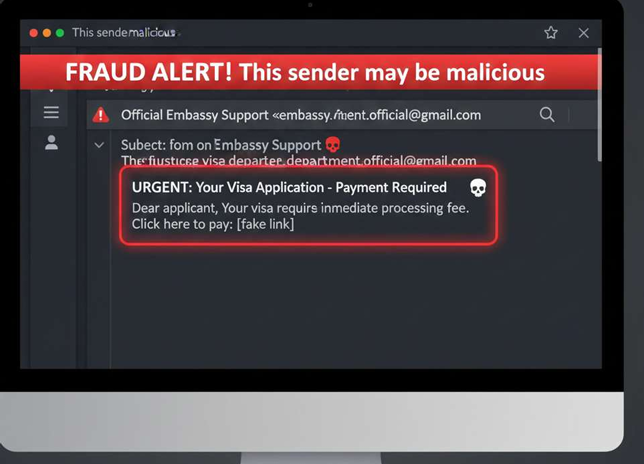
5. Fake Embassy Emails
Always check the sender's domain.
Embassies do not use Gmail/Yahoo for official communication.
Real Examples of Common Scams
These are real scenarios victims often report:
Case 1: Fake Visa Fee Collection
A person applied for a Canada visa through a fake portal. After paying ₹12,000 as "file opening fee," the agent blocked them.
Case 2: Fake Social Media Agent
A student sent passport documents to a WhatsApp agent. The scammers used their identity for criminal activities.
Case 3: Fake Appointment Letter
A person received an "appointment confirmation" for a Schengen visa. But when they went to the center, the appointment was not real.
These examples show why awareness is necessary.
Safe Way to Apply for Your Passport
1. Visit the Official Embassy Website
Every embassy has its own portal.
2. Read Requirements Carefully
Documents needed vary for each country.
3. Avoid On-Spot Payment to Unknown Agents
4. Book Your Appointment Yourself
If unsure, you can use trusted platforms like https://consularhelpdesk.com/ for guidance without worry.
What to Do If You Suspect You're Being Scammed
If something feels wrong, follow these steps immediately:
1. Stop Communication
Don't reply or send more documents.
2. Block the Person or Website
3. Report to Cyber Crime
You can file a report online depending on your country.
4. Change Your Passwords
Especially if you shared any personal information.
5. Contact Your Bank Immediately
If you've transferred money.
Bonus Tips to Stay Safe When Dealing With Travel Services Online
- Always double-check URLs before entering personal details
- Don't share passport or ID photos on WhatsApp unless it's someone verified
- Use a strong password for travel portals
- Keep copies of all payments
- Never rely on shortcuts — real processes take time
Conclusion: Stay Smart, Stay Safe, and Travel Without Fear
Applying for passports, visas, and travel services online is convenient — but only if done the right way. Scammers thrive on urgency, fear, and lack of awareness. By following the steps and red flags mentioned above, you can protect yourself from losing money, documents, and personal identity.
If you ever need guidance or reliable information, platforms like https://consularhelpdesk.com/ can help you navigate the process safely.
Safe travels — and stay alert!
Frequently Asked Questions (FAQ)
1. How do I know if a passport or visa website is real?
A genuine portal will always have a .gov or official country domain, a secure HTTPS connection, and clear contact details. Fake websites often have spelling mistakes, ask for payment too early, or hide their owner information.
2. Can someone really 'guarantee' a visa?
No. No agent, consultancy, or website can guarantee a visa. Visa approval depends on your documents, interview performance, and the embassy's decision. Any service claiming 100% approval is a red flag.
3. Is it safe to send my passport details through WhatsApp or social media?
Never. Legitimate agencies do not collect sensitive documents through chat apps. Always upload documents only on official government portals or trusted service platforms.
4. How can I identify a fake travel agent?
Fake agents usually lack verified registration, avoid giving invoices, insist on personal payments, and communicate only through WhatsApp. A real agent will be registered, have an office, show licenses, and follow proper procedures.
5. Are fast-track passport services real?
Only the government can offer official fast-track or Tatkal services. Private websites claiming '24-hour passport delivery' are almost always scams.
Request a Callback
Our experts will call you back at your preferblue time to assist with your embassy services.
Call Us Now