THE ULTIMATE GUIDE TO USING CANADIAN AIRPORTS (YYZ, YVR, YYC) FOR FIRST-TIME VISITORS
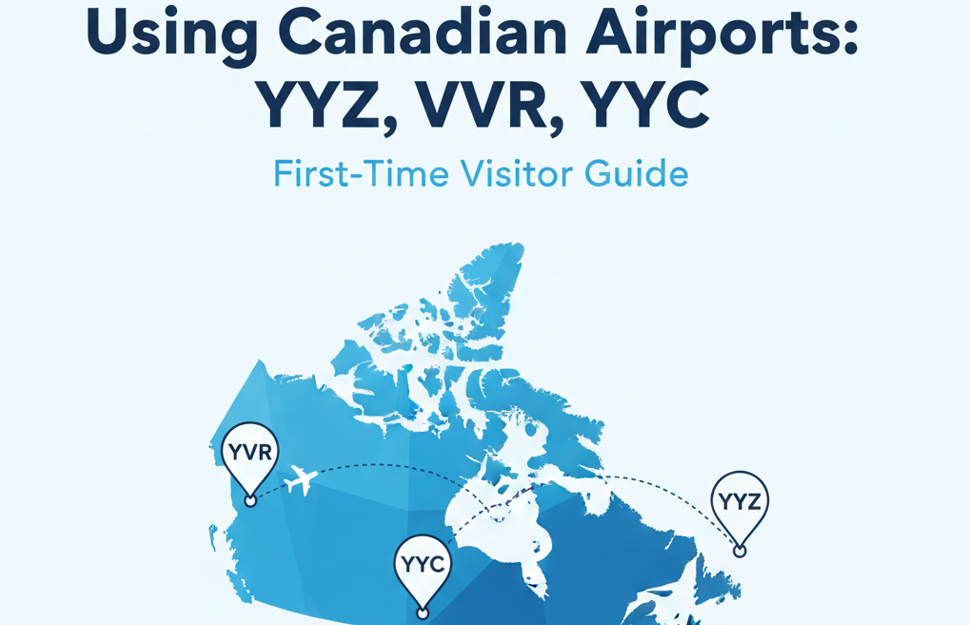
Table of Contents
- 1.What Do YYZ, YVR, and YYC Mean?
- 2.Overview of Canada's Three Major Airports
- 3.Toronto Pearson International Airport (YYZ)
- 4.Vancouver International Airport (YVR)
- 5.Calgary International Airport (YYC)
- 6.Step-by-Step Arrival Guide
- 7.Transportation from YYZ, YVR, and YYC
- 8.Currency, SIM Cards, and Other Essentials
- 9.Hotels Near the Airport
- 10.Airport Security Tips
- 11.Airport Facilities
- 12.Safety Tips for New Travelers
- 13.Common Mistakes to Avoid
- 14.Frequently Asked Questions (FAQs)
- 15.Final Thoughts
Traveling to Canada for the very first time is exciting — but it can also feel confusing, especially when you see airport codes like YYZ, YVR, and YYC everywhere. If you're not familiar with airport codes, you might ask:
"What do these letters even mean?"
Don't worry — this guide is written in a simple, friendly way, perfect for travelers from any background, even if you've never flown before.
We will cover everything you need to know, including:
- What YYZ, YVR, and YYC really mean
- Step-by-step arrival guide
- Immigration and customs
- Transportation options
- Airport facilities
- Safety tips
- Mistakes to avoid
- When to use Consular Helpdesk
WHAT DO YYZ, YVR, AND YYC MEAN? (IMPORTANT FOR NEW TRAVELERS)
Before we explore the airports, let's clear up the biggest confusion for first-time visitors
Why Canadian airports start with "Y"
Most countries have their own system for airport codes. In Canada:
- Airports originally developed from weather stations.
- Stations with active weather monitoring had the prefix "Y".
- When airports were built, they kept the "Y".
- The remaining two letters come from the city or old telegraph codes.
So now almost every major Canadian airport begins with Y.
Examples:
- Montreal → YUL
- Ottawa → YOW
- Halifax → YHZ
- Edmonton → YEG
- Winnipeg → YWG
Now let's break down the main three.
YYZ – Toronto Pearson International Airport
- Location: Toronto, Ontario
- Why "YYZ"? "YZ" comes from an old telegraph/railway code for Malton, the area where the airport sits.
Combined with the Canadian "Y" prefix → YYZ
So YYZ = Canada (Y) + Malton code (YZ)
YVR – Vancouver International Airport
- Location: Vancouver, British Columbia
- Why "YVR"? "VR" stands for Vancouver
- "Y" for Canada
- Together: YVR
YYC – Calgary International Airport
- Location: Calgary, Alberta
- Why "YYC"? "YC" stands for Calgary
- "Y" for Canada
- Together: YYC
Understanding these codes helps you read your ticket, your baggage tag, and airport signs confidently.
SECTION 1: OVERVIEW OF CANADA'S THREE MAJOR AIRPORTS
Canada is huge — its airports are built to handle millions of travelers smoothly. The major international entry points are:
- Toronto Pearson (YYZ) – East/Central Canada
- Vancouver Airport (YVR) – West Coast
- Calgary Airport (YYC) – Western Prairies + Rocky Mountains
Let's explore each.
1. TORONTO PEARSON INTERNATIONAL AIRPORT (YYZ)
Toronto Pearson is the busiest airport in Canada, handling over 50 million passengers yearly. For many, it's the first entry point into the country.
Why travelers like YYZ
- Modern design
- Multilingual announcements
- Two big terminals
- Many food and shopping options
- Direct train to downtown
- Helpful staff
Terminals
- Terminal 1: Air Canada + Star Alliance
- Terminal 3: Emirates, Qatar, British Airways, Etihad, and many international airlines
Even though YYZ is huge, clear signs and staff make it manageable for first-time travelers
2. VANCOUVER INTERNATIONAL AIRPORT (YVR)
YVR is known as one of the most beautiful airports in the world. It's peaceful, clean, and filled with stunning Indigenous art.
Why YVR is beginner-friendly
- Easy-to-follow layout
- Very clean and safe
- Efficient immigration process
- Ideal for flights from Asia, Australia, and the Pacific
Terminals
- Main Terminal: Domestic + international
- South Terminal: Regional small flights
If you like calm, visually pleasing airports, YVR is perfect.
3. CALGARY INTERNATIONAL AIRPORT (YYC)
YYC is modern, spacious, and less crowded than the other two. It is the gateway to Alberta's top destinations like:
- Banff
- Lake Louise
- Jasper
- The Rocky Mountains
Why YYC is great
- Very fast immigration lines
- Friendly staff
- Less stressful
- Easy navigation
Terminals
- Domestic
- International
SECTION 2: STEP-BY-STEP ARRIVAL GUIDE (BEGINNER FRIENDLY)
Here's exactly what happens when your plane lands.
STEP 1: FOLLOW THE SIGNS
After landing, follow signs for:
- Arrivals
- Baggage Claim
- Immigration/Border Control
Signs are extremely clear — you will not get lost.
STEP 2: IMMIGRATION (PASSPORT CONTROL)
A border officer will ask a few simple questions:
- Why are you visiting Canada?
- How long will you stay?
- Where will you stay?
- Do you have a return ticket?
Tips
- Speak politely
- Answer honestly
- Keep documents handy
If you ever face visa or document issues, consular help desk helps with travel support and document problems.
STEP 3: COLLECT YOUR LUGGAGE
Go to the baggage carousel indicated on the screen.
If your bag is missing: Report immediately to Baggage Services near the carousels.
STEP 4: CUSTOMS
Canada has strict customs. You must declare:
- Food
- Meat, fruits, seeds
- Cash above CAD 10,000
- Electronics for resale
Never lie — penalties are high.
STEP 5: EXIT TO THE ARRIVAL HALL
You will find:
- ATMs
- Currency exchange
- SIM card kiosks
- Tourist help desks
- Taxi/Uber pickup zones
You're officially inside Canada!
SECTION 3: TRANSPORTATION FROM YYZ, YVR, AND YYC
Let's see how to travel from each airport to the city.
TORONTO PEARSON (YYZ)
1. UP Express Train
Fastest option
- 25 minutes to downtown
- Runs every 15 minutes
2. Uber, Lyft, Taxi
- Safe and reliable
- 30–60 minutes depending on traffic
3. Public Buses
Good for budget travelers.
VANCOUVER AIRPORT (YVR)
1. SkyTrain Canada Line
Super easy and affordable
- 25 minutes to downtown
2. Taxi/Uber/Lyft
Available at all times.
CALGARY AIRPORT (YYC)
1. Bus Route 300
Budget-friendly connection to downtown
2. Uber, Taxi
Good for families and luggage-heavy travelers
SECTION 4: CURRENCY, SIM CARDS, AND OTHER ESSENTIALS
1. Currency Exchange
ATMs offer the best rates.
Exchange counters are convenient but costlier.
2. SIM Cards
You can buy from:
- Rogers
- Bell
- Telus
- Fido
- Chatr
SIM kiosks are available in all airports.
3. Food Options
Expect:
- Tim Hortons
- Starbucks
- McDonald's
- Local Canadian cafes
SECTION 5: HOTELS NEAR THE AIRPORT
YYZ – Toronto
- Sheraton Gateway (connected to Terminal 3)
- Alt Hotel Pearson
YVR – Vancouver
- Fairmont Vancouver Airport
- Pacific Gateway Hotel
YYC – Calgary
- Marriott Calgary Airport
- Delta Calgary Airport
SECTION 6: AIRPORT SECURITY TIPS
To pass security quickly:
- Remove laptops
- Follow the 100ml liquid rule
- Don't bring sharp objects
- Keep boarding pass ready
Wearing simple shoes helps!
SECTION 7: AIRPORT FACILITIES
All three airports offer:
- Free high-speed WiFi
- Charging ports
- Prayer rooms
- Kids' play areas
- Duty-free shops
- Lounges
- Wheelchair support
- Water refill stations
SECTION 8: SAFETY TIPS FOR NEW TRAVELERS
- Only use official taxis/Uber
- Keep passport safe
- Don't exchange money with strangers
- Stay aware of your luggage
- Follow staff instructions
For emergencies such as lost passports, rejected documents, or visa issues consular help desk provides fast consular assistance.
SECTION 9: COMMON MISTAKES TO AVOID
- Not declaring food
- Carrying water bottles through security
- Mixing up terminal numbers
- Not knowing the airport code
- Not planning transport
- Forgetting travel insurance
Frequently Asked Questions (FAQs)
1. What do YYZ, YVR, and YYC mean?
These are the official IATA airport codes used worldwide to identify airports.
- YYZ = Toronto Pearson International Airport
- YVR = Vancouver International Airport
- YYC = Calgary International Airport
Most Canadian airport codes start with "Y", which comes from old weather-station identifiers used before airports existed.
2. Which Canadian airport is the easiest for first-time international travelers?
Toronto Pearson (YYZ) and Vancouver International (YVR) are both extremely beginner-friendly. YVR is often considered the easiest because of its simple layout, clear signs, and quick airport processes. YYZ is larger but offers more flight options and 24/7 traveler facilities.
3. How early should I arrive at YYZ, YVR, or YYC before my flight?
- Domestic flights: arrive at least 2 hours before departure
- International flights: arrive at least 3 hours before
These airports can be busy, especially during summer and holidays, so giving extra time helps avoid stress.
4. Do I need any special documents when traveling through Canadian airports?
Yes, you must have:
- A valid passport
- Visa or eTA, depending on your nationality
- Your boarding pass
- Any travel health documents required by airlines
If you're unsure, you can easily check your visa or document status at ConsularHelpDesk, which offers simple guidance for travelers.
5. Are the airports (YYZ, YVR, YYC) easy to navigate for beginners?
Yes! All three airports are designed to be very beginner-friendly. They include:
- Clear English signage
- Step-by-step directions
- Information desks
- Free Wi-Fi
- Easy baggage claim areas
- Helpful staff for travelers
If it's your first time, simply follow the signs for Arrivals, Departures, Baggage Claim, or Customs, and you'll get where you need to go.
FINAL THOUGHTS
Canadian airports — YYZ, YVR, and YYC — are modern, safe, and extremely organized. Whether you're traveling for work, family, tourism, or studies, this guide gives you every detail you need to travel confidently.
Now that you understand the meaning of the airport codes, the arrival process, transportation, and important tips, you'll feel prepared and stress-free.
And if you ever face issues like:
- Lost passport
- Visa delay
- Document verification
- Consular emergencies
Visit: consular help desk
They are a reliable solution for travelers who need quick and professional support