Foods You Can and Cannot Carry While Traveling Abroad – Guide for Indians
A Simple, Friendly & Practical Guide for Stress-Free International Travel
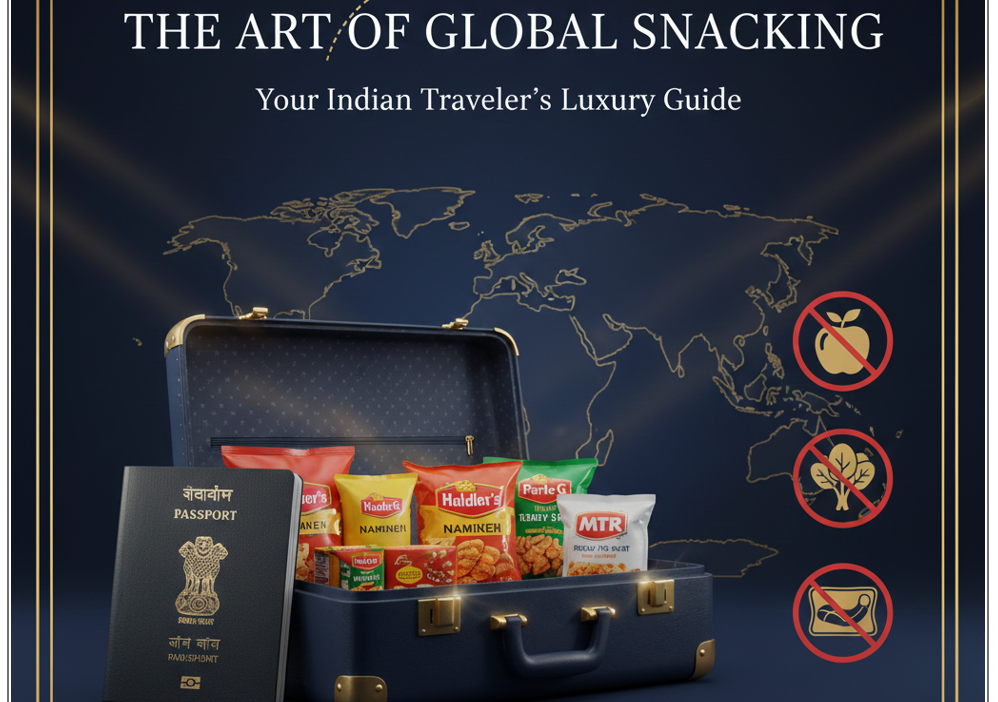
Table of Contents
- 1.Why Food Restrictions Exist in International Travel
- 2.Big Picture Summary (2025 Travel Update)
- 3.Foods You CAN Carry While Traveling Abroad (2025)
- 4.Foods You CANNOT Carry While Traveling Abroad (2025 Update)
- 5.Country-Wise Food Restrictions (Quick 2025 Guide)
- 6.Smart Packing Tips for Indians Traveling Abroad (2025)
- 7.Insider Tips from Frequent Indian Travelers (2025 Edition)
- 8.A Few Helpful Travel Tools for Indians
- 9.Frequently Asked Questions (FAQs)
- 10.Conclusion
Traveling abroad is exciting—whether it's your first international trip or your tenth. But one thing that often confuses many Indian travelers is what food can and cannot be carried on international flights and what foreign customs officers will allow.
Even in 2025, thousands of Indian travelers face issues at airports because they unknowingly carry restricted items. Some foods get confiscated, some bags get flagged for inspection, and in rare cases, customs penalties may apply.
To make sure your trip starts smoothly, here is a clear, simple, human-friendly guide that breaks everything down—no complicated terms, no confusing rules—just straight, practical advice.
You can even bookmark this article for future reference. And if you ever need global travel assistance, you can check useful travel support platforms like consular help desk anytime during your journey.
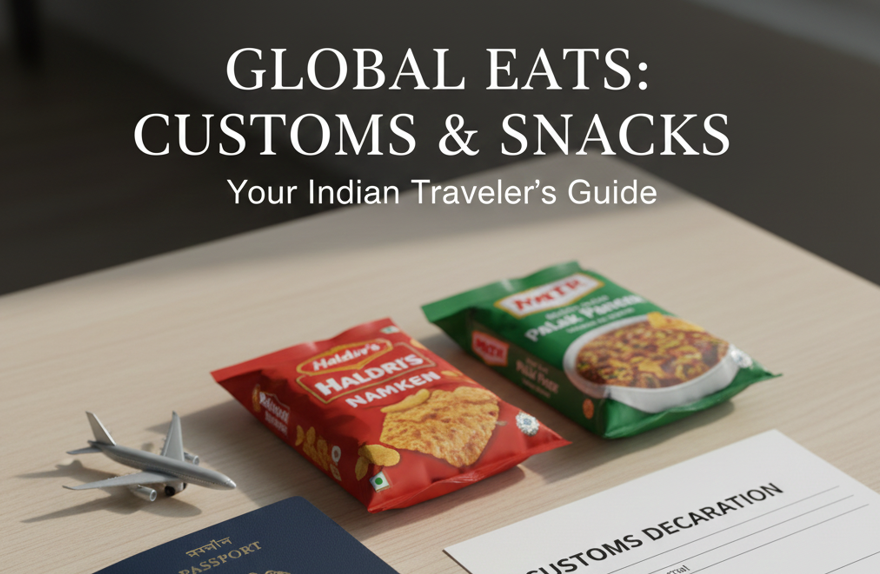
Why Food Restrictions Exist in International Travel
Before we jump into the list of allowed and banned foods, let's understand why there are restrictions.
Countries protect their environment, crops, and livestock. Even a small fruit, seed, or meat product can carry pests or bacteria that may harm the country's agriculture.
So, food rules are not to trouble you—they are for safety.
Different countries have different rules, but the basics remain similar.
Big Picture Summary (2025 Travel Update)
Here's the simple version:
You CAN generally carry:
- Dry snacks
- Biscuits, namkeen
- Sweets (packed)
- Ready-to-eat sealed meals
- Powdered items
- Instant noodles
- Tea/coffee sachets
- Chocolates
- Certain spices (sealed)
You CANNOT carry:
- Fresh fruits
- Fresh vegetables
- Homemade pickles
- Meat, fish, eggs (fresh)
- Dairy (fresh)
- Seeds and raw pulses
- Ghee, butter (in some countries)
- Cooked food without packaging
- Liquid foods above 100 ml in hand luggage
Now let's go deeper.
Foods You CAN Carry While Traveling Abroad (2025)
Indians love carrying food—whether it's homemade snacks, sweets for relatives, or comfort food for long trips.
Luckily, many items are allowed internationally if packed properly.
Below are the safe categories.
1. Dry Snacks (Almost Always Allowed)
These are the easiest to carry and highly recommended for travel.
Examples:
- Chips (Lays, Bingo, etc.)
- Namkeen (Haldiram's, Kurkure, mixture)
- Khakhra
- Mathri
- Banana chips
- Dry thepla (packed)
- Popcorn
Conditions:
- Must be factory-sealed or neatly packed.
- No strong smell (some countries don't like it).
2. Biscuits & Bakery Items (Usually Allowed)
Perfect for flights, layovers, and long immigration lines.
Examples:
- Marie Gold
- Parle-G
- Good Day
- Cookies
- Toast (rusk)
Pack them properly to prevent breakage
3. Sweets (Packaged)
Great for gifting relatives abroad.
Allowed Examples:
- Soan papdi
- Kaju katli
- Sweets in vacuum-sealed packs
- Mysore pak (packed)
- Ladoo (boxed)
Avoid:
- Fresh rasgulla/rasmalai (liquid)
- Sweets containing milk/cream
4. Tea, Coffee & Beverage Powders
These are allowed almost everywhere.
Examples:
- Instant tea premix
- Coffee powder
- Milk powder
- Hot chocolate mix
No issues at customs.
5. Ready-to-Eat (RTE) Meals (Highly Popular Among Indians Abroad)
These have become a blessing for students and working professionals.
Examples:
- MTR ready meals
- Haldiram's RTE
- Cup noodles
- Pasta-in-a-cup
- Instant upma, poha
- Magdalene freeze-dried meals
Tip: Carry 2–3 for emergencies and first few days.
6. Spices (Limited But Allowed When Packed)
Indian spices are world famous but must be packed properly.
Allowed (in sealed packs):
- Turmeric
- Garam masala
- Chili powder
- Pepper
- Jeera
- Tea masala
Avoid:
- Loose masalas
- Masala with strong smell
- Unlabeled powders
Australia and New Zealand are very strict—pack carefully.
7. Chocolates & Confectionery
Almost always safe.
Examples:
- Dairy Milk
- Ferrero Rocher
- Toffees
- Candy packs
Kids' favorite, no customs issue.
8. Pickles (ONLY in sealed factory packaging)
Homemade pickles are a strict NO in most countries.
Allowed:
- Priya pickle
- Mother's Recipe pickle
- Aachi pickle (sealed)
Avoid:
- Homemade mango/lemon pickles
- Open containers
Foods You CANNOT Carry While Traveling Abroad (2025 Update)
Now, let's talk about the tricky items. These cause 80% of confiscations at foreign airports.
1. Fresh Fruits (NOT Allowed Almost Everywhere)
Countries like the US, UK, Australia, Singapore, Canada have zero-tolerance for fresh fruits.
Even one apple can create problems.
Examples NOT Allowed:
- Apples
- Bananas
- Mangoes
- Grapes
- Oranges
2. Fresh Vegetables (Strictly Prohibited)
No country allows raw veggies due to pest risks.
Not Allowed:
- Onions
- Garlic
- Green chillies
- Tomatoes
- Leafy vegetables
3. Homemade Cooked Food
This is where many Indians face trouble.
If it's not sealed or packed professionally, it's usually not allowed.
NOT Allowed:
- Idli, dosa batter
- Sambar
- Rasam
- Sabzi
- Chapati (loose)
- Fresh curry
Some officers may allow dry rotis, but it depends entirely on the country.
4. Meat, Fish & Eggs (Fresh or Frozen)
Extremely strict rules worldwide.
Strictly Banned:
- Raw chicken
- Frozen meat
- Eggs
- Fresh fish
Sometimes Allowed (with declaration):
- Canned tuna
- Canned chicken
- Packaged meat jerky
5. Dairy & Milk Products (Fresh)
Fresh dairy spoils fast and may carry bacteria.
NOT Allowed:
- Curd
- Paneer
- Butter (many countries ban it)
- Ghee (banned in some, allowed in others)
- Cheese (soft cheese especially)
Allowed Sometimes:
- Packaged cheese slices
- Milk powder
Always check country-specific rules.
6. Seeds, Raw Pulses & Grains
Customs departments treat seeds as biosecurity risks.
NOT Allowed:
- Wheat
- Rice (raw)
- Rice grains loose
- Dal, chana, rajma
- Seeds for planting
Sometimes Allowed:
- Packaged rice (in US, UK)
- Instant rice meals
7. Liquids Over 100 ml in Hand Luggage
This is an airline rule, not customs.
Not Allowed in Hand Luggage:
- Chutneys
- Sauces
- Liquid sweets
- Shakes
- Milk
- Coconut water
But you can carry them in check-in baggage (if allowed by customs).
Country-Wise Food Restrictions (Quick 2025 Guide)
USA
Very strict. No fruits, vegetables, eggs, meat, seeds.
Dry snacks, sweets, spices allowed.
UK
Moderate rules. Avoid fresh produce.
Dry foods and sealed items allowed.
Canada
Strict like the USA.
No fresh items or homemade foods.
Australia
One of the strictest.
Declaring food is compulsory.
Singapore
Moderately strict.
Meat items are strictly regulated.
Europe (Schengen)
Relaxed with packaged food.
Avoid raw items.
Smart Packing Tips for Indians Traveling Abroad (2025)
To avoid airport hassles, follow these simple steps:
- Use vacuum-sealed packs
- Carry only labeled, printed packages
- Avoid strong-smelling foods
- Keep food inside ziplock bags
- Avoid carrying too much
- Declare everything honestly
Remember: Declaring is safer than hiding.
Insider Tips from Frequent Indian Travelers (2025 Edition)
This unique section gives you what real travelers have learned through experience—something not found in typical blogs.
1. Carry a "First 48 Hours Survival Kit"
Include:
- 2 ready meals
- Instant noodles
- Protein bar
- Tea/coffee sachets
- Biscuits
This helps when you reach late at night or when shops are closed.
2. Avoid too much Indian food
You will find Indian stores abroad easily nowadays.
Carry only what you need.
3. Always check updated rules
Regulations change often.
Before flying, check your country's latest customs page.
4. Freeze liquids if you must carry them
Some travelers freeze ghee or liquids to avoid leakage. (Not applicable if the item itself is banned.)
5. Don't argue with customs officers
They follow strict rules.
Be polite—it helps.
A Few Helpful Travel Tools for Indians
If you ever need global support, documentation help, or travel guidance, platforms like consular help desk are extremely useful for Indian travelers abroad.
Frequently Asked Questions (FAQs)
1. What food items can Indians safely carry on international flights in 2025?
You can safely carry dry, packaged, and factory-sealed foods. These include biscuits, namkeen, chocolates, instant noodles, ready-to-eat meals, packaged sweets, tea/coffee sachets, powdered beverages, and sealed masalas. As long as the food is dry, non-liquid, and properly labeled, most countries allow it without any customs issues.
2. Why are fresh foods like fruits, vegetables, and homemade meals not allowed abroad?
Fresh produce and homemade perishable foods carry high risks of pests, bacteria, and plant diseases. Countries like the USA, Australia, Singapore, Canada, and the UK follow strict biosecurity rules to protect their agriculture. That's why items like fruits, vegetables, fresh meat, eggs, dairy, homemade curries, and pickles are banned or heavily restricted.
3. Are Indian spices allowed during international travel?
Yes, Indian spices are allowed if they are in sealed, branded, original packaging. However, loose powders, strong-smelling masalas, and unlabelled packets may get confiscated, especially in Australia or New Zealand. Stick to sealed turmeric, chilli powder, garam masala, and tea masala for hassle-free travel.
4. Can I carry ghee, pickles, or paneer on an international flight?
Ghee → Allowed in some countries, restricted in many. Always check local rules.
Pickles → Only factory-sealed pickles are allowed. Homemade pickles are almost always banned.
Paneer → Treated like dairy, so it is not allowed in most countries. When unsure, avoid carrying them or check the specific country's customs website.
5. What happens if customs finds a banned food item in my luggage?
Customs officers will either:
- Confiscate the item
- Fine you (in strict countries like Australia, up to $400+)
- Flag your bag for extra inspection
If you want to avoid problems, always declare your food items on the customs form. Declaring is safe—even if the food is banned, you won't be fined. The issue arises only when you hide it.
Conclusion
Traveling abroad becomes stress-free when you know what food items you can and cannot carry. In 2025, most countries welcome dry, packaged, factory-sealed items but strictly prohibit fresh, raw, or homemade perishable foods.
Just remember:
- Keep it dry
- Keep it sealed
- Keep it simple
- Declare all food items
This guide ensures you avoid customs issues and enjoy a smooth travel experience.
If you found this helpful, save it for your next trip—and share it with friends or family traveling abroad!
Safe travels!